Living here / Heat and bills
Minnesota's Cold Weather Rule: what it protects, and what it doesn't
From October 1 to April 30, Minnesota utilities must follow extra steps before cutting off heat. Which statute applies depends on who sells you the power, and the rule is not a pause on bills.
Byline pending. Compiled from public sources; awaiting a named contributor. Compiled .
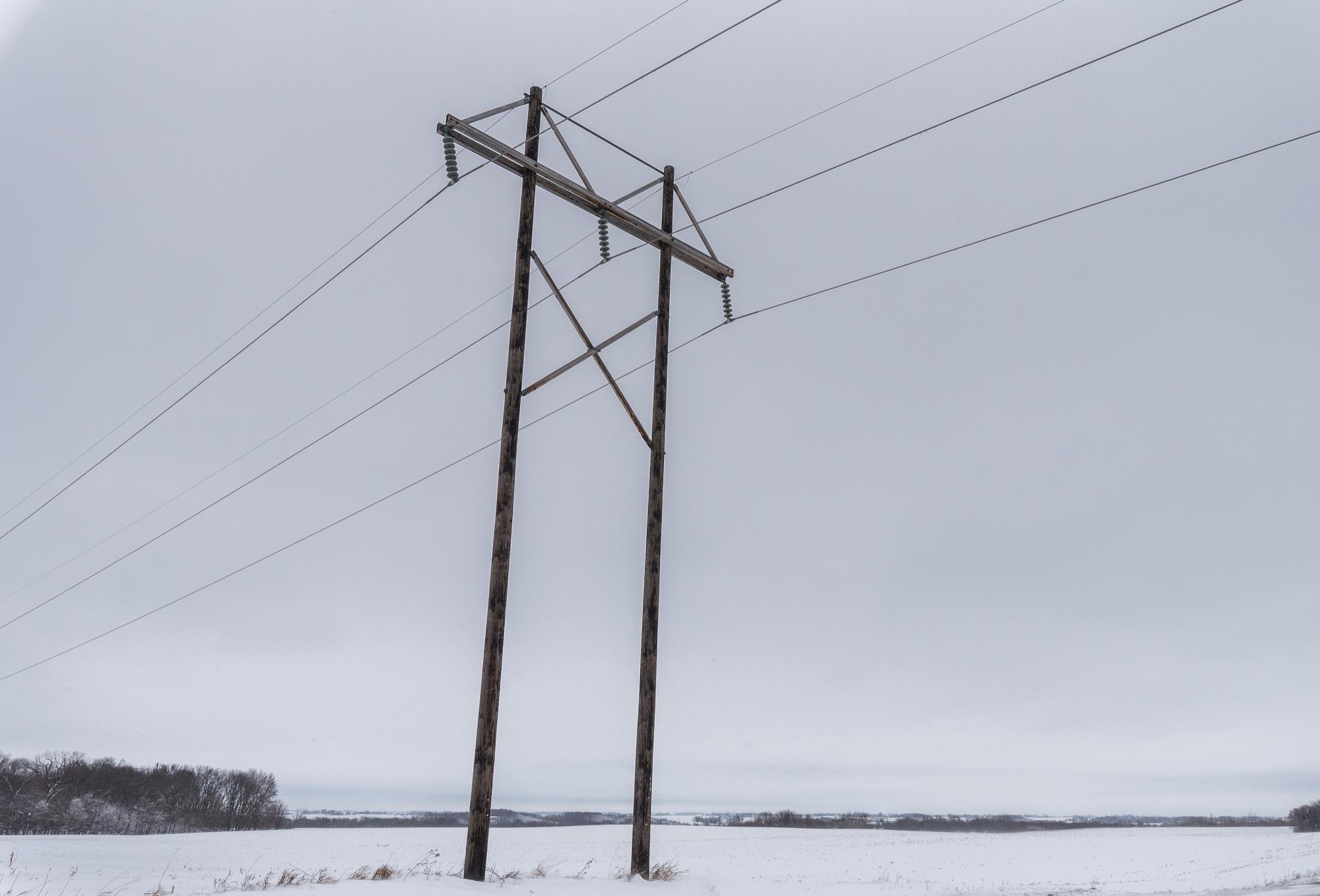
Electric power lines over a snow-covered farm field in rural Minnesota. Illustrative: not a utility or customer connected to this guide.
Illustrative. Photo: Tony Webster, CC BY 2.0. Not taken by MNIRL; resized. Credits
What should I do?
Read from the sources below
Who this applies to
Households that heat with electricity or natural gas from a utility, and have a disconnection notice or an unpaid bill.
By when
Before the disconnection date on your notice. The rule covers October 1 through April 30.
Whom to call or check
- Public Utilities Commission consumer line651-296-0406 or 800-657-3782
- Commerce Department energy assistance (LIHEAP)800-657-3710
- Attorney General's consumer line651-296-3353 or 800-657-3787
What to do
- Find out who supplies your power and heat. Investor-owned utilities and cooperative or municipal ones follow different statutes.
- If a notice arrives, call the utility before the disconnection date and ask for a payment agreement.
- Ask whether you qualify for energy assistance (LIHEAP) through the Department of Commerce.
- Keep copies of notices and agreements, and write down the dates of every call.
The rule limits disconnection. It is not a pause on bills, and it does not cover delivered fuels such as oil or propane. If you lose heat, contact your utility, emergency services or your county.
Quick read
- Season
- October 1 through April 30
- Covers
- Electric and natural gas utilities, with different statutes for investor-owned and for cooperative or municipal utilities
- Doesn't cover
- Delivered fuels: oil, propane, wood
- Not a safety assurance
- The rule limits disconnection. It does not guarantee your home is warm or your bill is paid.
The name suggests that nobody can lose heat in winter. The rule is narrower than that. It sets extra steps a utility must take between October 1 and April 30 before it disconnects a residential customer, and the strongest protection depends on a payment agreement that you make and keep. It does not erase a bill, and it says nothing about whether your home is warm. Read the sources linked below for your own situation; this guide summarizes public materials and is not legal advice.
Which law applies depends on your utility
Minnesota has more than one statute. Section 216B.096 is the general cold weather rule. Section 216B.097 is titled "Cold Weather Rule; Cooperative or Municipal Utility" and covers residential customers of cooperative electric associations and municipal utilities. An earlier draft of this guide pointed to 216B.097 for the 10 percent cap; the cap is in 216B.096, subdivision 5, not 216B.097. If you are not sure who your utility is, check the bill.
| Row | 216B.096 | 216B.097 |
|---|---|---|
| Applies to | Cold weather rule for utilities generally (the Public Utilities Commission's page describes it as covering gas and electric utilities) | Cooperative electric associations and municipal utilities, residential customers |
| Season | October 1 to April 30 | October 1 to April 30 |
| Income test for the strongest protection | At or below 50 percent of state median income | At or below 50 percent of state median income |
| Above that income | The customer has the right to a payment agreement that takes the customer's financial circumstances into account, and may not be disconnected while making timely payments under an accepted agreement (subdivision 10) | Not described in the sections we read |
| 10 percent of income cap | Subdivision 5 | Not in this section |
| Notice before disconnection | See the statute | Not before 30 days after mailing, or 15 days after personal delivery; utilities must notify customers between August 15 and October 1 |
| No disconnection on | See the statute and the Attorney General page | Fridays (unless the customer declines an agreement), weekends, holidays, the day before a holiday, or when offices are closed |
| If you appeal | Complaints go to the Public Utilities Commission | An appeal pauses disconnection until it is resolved |
Who it covers
The Public Utilities Commission has said that gas and electric utilities take part and that renters are eligible if heat is electric or gas and the account is in their name. We could not re-read that page on November 6, 2026, because it redirected to a bot-check screen, which we did not try to get around. The rule does not apply to delivered fuels: oil, propane or wood. If your furnace runs on electricity, apply through your electric company.
What the law sets
For households at or below 50 percent of state median income, the statute says a utility may not disconnect while you keep a payment agreement, and it cannot require more than 10 percent of household income. The statute also sets a goal of restoring service within 24 hours of an agreement. Above that income, the statute says you have the right to a payment agreement that considers your financial circumstances, and you may not be disconnected while making timely payments under an accepted agreement. An earlier draft said reconnection above that income depends on an agreement the utility accepts; that was incomplete, and this version replaces it.
If a shutoff notice arrives
The Attorney General's office says a notice should come with a statement of your rights and related documents. For cooperative and municipal utilities, 216B.097 sets notice periods (at least 30 days after mailing or 15 days after personal delivery) and bars disconnection on weekends, holidays, the day before a holiday and, in most cases, Fridays. An appeal pauses disconnection until it is resolved. For other utilities, the Attorney General's page says disconnections are typically barred on those days too, and that medical situations have their own protections.
| For | Number |
|---|---|
| Public Utilities Commission consumer line | 651-296-0406 or 800-657-3782 |
| Commerce Department energy assistance (LIHEAP) | 800-657-3710 |
| Attorney General's consumer line | 651-296-3353 or 800-657-3787 |
Call the utility first and ask about a payment plan. LIHEAP is the federal energy assistance program the state runs through the Department of Commerce, and the Attorney General's page links it to households at or below 50 percent of state median income. Larger utilities, those with more than 3,000 customers, are required to offer budget billing. Disputes go to the Public Utilities Commission.
Common mistakes
Assuming the rule means no bill. Assuming a missed payment is forgiven: the Commission has said a customer who misses payments may not get a new plan until the next season, though that comes from the page we could not re-read. Assuming it covers propane or oil. Using the wrong statute for a co-op or city utility. Waiting until after the notice date to call.
What differs by utility
Investor-owned utilities fall under 216B.096. Cooperative and municipal utilities have their own section with explicit notice and day-of-week rules. Delivered fuels are outside both. We did not read individual utilities' own policies, which can add more.
What to do
Find out who supplies your power and heat. If you get a notice, call the utility before the disconnection date and ask for a payment agreement. Ask whether you qualify for LIHEAP through the Department of Commerce. Keep copies of notices and agreements. If you disagree with the utility, use the complaint route for your utility type and write down dates. If you lose heat, do not rely on this guide for safety; contact your utility, local emergency services or a county assistance office.
What we could not confirm
The Commission's own page: it was blocked on our re-read, so its statements (10-day appeal window, renter eligibility, loss of eligibility after missed payments) are carried from our earlier reading and marked not checked. The Attorney General's page states no appeal deadline. We did not check current income thresholds in dollars. We did not test any phone line.
How this was made
Primary sources (4)
- Date checked
- Sources opened and read on . Rules and prices change; confirm with the source before you act.
- Method
- Desk research. Agency pages and statutes were opened and read on the dates shown, and each claim is tied to the page it came from. Figures we calculated say so. No place was visited and no one was interviewed.
- Review status
- Draft AI research draft, human review pending. No named person has reviewed this page, and nobody from MNIRL has checked it in person. What our labels mean.
What we do not know
- Whether a rule, fee or hour changed after the date checked.
- Anything about a specific place on a specific day: nobody has gone to see.
Found a mistake?
Email rice.john.nextgenai@gmail.com with the page and a source. We review each one and note corrections on the page.
Every claim, with its source
Each line shows what was claimed, the label for how we know, the page it came from and what it does not establish. What these labels mean.
The Public Utilities Commission's shut-off protection page says the Cold Weather Rule protects residential customers from electric or natural gas shut-off between October 1 and April 30, and that to be protected you must make and keep a payment plan you and your utility agree on.
Published by the providerSource: mn.gov · Checked by AI research draft, human review pending
Limits: Read on the Public Utilities Commission page on 2026-11-07. The 10-day appeal window and renter eligibility come only from this page. The rule's details can change; confirm with your utility.
Section 216B.096 sets the general cold weather rule. At or below 50 percent of state median income a utility may not disconnect a customer who keeps a payment agreement, payments are capped at 10 percent of household income (subdivision 5), and above that income the customer has the right to a payment agreement that takes financial circumstances into account (subdivision 10).
Official source checkedSource: revisor.mn.gov · Checked by AI research draft, human review pending
Limits: Statute text read 2026-11-06 in the revisor's 2026 edition. Summary only; exceptions exist.
Section 216B.097 covers residential customers of cooperative electric associations and municipal utilities: October 1 to April 30, notice not before 30 days after mailing or 15 days after personal delivery, no disconnection on Fridays (unless the customer declines an agreement), weekends, holidays or the day before a holiday, and an appeal pauses disconnection.
Official source checkedSource: revisor.mn.gov · Checked by AI research draft, human review pending
Limits: Statute read 2026-11-06. It does not contain the 10 percent cap; that is in 216B.096. This corrects an earlier draft.
The Attorney General's office page lists utility disconnection rights, the days disconnection is typically barred, and phone numbers for the Public Utilities Commission, Commerce Department LIHEAP and the Attorney General.
Official source checkedSource: ag.state.mn.us · Checked by AI research draft, human review pending
Limits: Read 2026-11-06. States no appeal deadline. Phone numbers were not tested.
Read next
Illustrative. Photo: Lorie Shaull, CC BY-SA 2.0. Not taken by MNIRL; resized. Credits
Draft New residents Compiled
Moving to Minnesota: your license, your plates and your insurance
A checklist for new residents with the deadlines, DVS license and title fees, the registration tax formula, the sales tax rule and insurance minimums, each tied to its source, and what still has to be confirmed at the counter.
Photo: Tony Webster, CC BY-SA 2.0. Not taken by MNIRL; resized. Credits
Draft Winter Compiled
Snow emergency parking in Minneapolis and Saint Paul, night by night
The day-by-day parking rules in Minneapolis and Saint Paul, side by side with towing costs, impound lot hours, how to get alerts, the status of Saint Paul's alternate-side pilot, and what the city pages do not say.
Illustrative. Photo: Tony Webster, CC BY 2.0. Not taken by MNIRL; resized. Credits
Draft Renting in Minnesota Compiled
Your security deposit in Minnesota: a three-week clock, and what it costs a landlord when it runs out
Minnesota gives a landlord three weeks after a tenancy ends to return a deposit or explain in writing why not. Here is the clock day by day, the penalties in the statute, and what to do before and after you hand back the keys.